
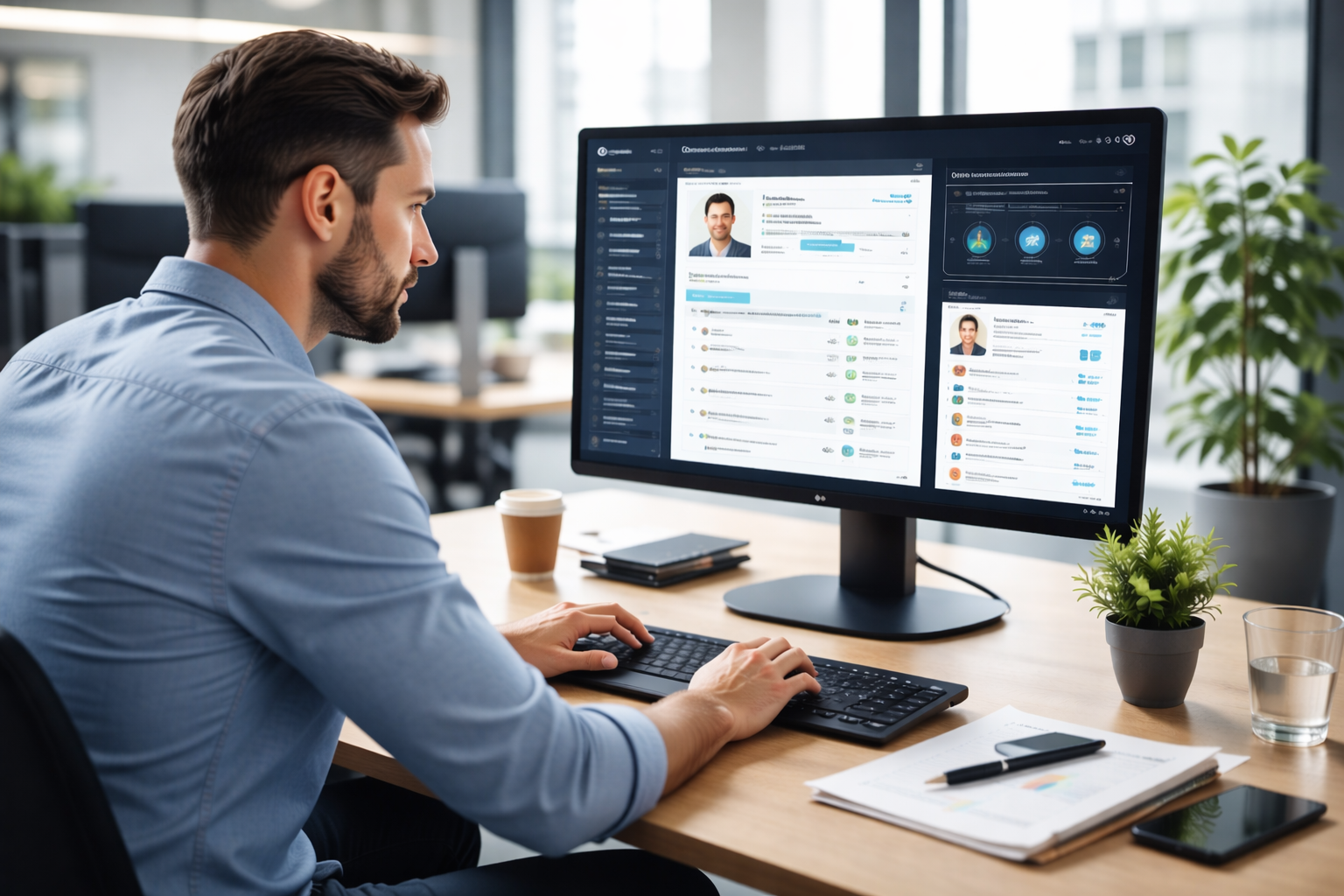
Resume screening software is transforming how companies identify and evaluate candidates. In today’s fast-paced hiring environment, recruiters often receive hundreds of applications for a single role. However, manually reviewing each resume is time-consuming and inefficient.
Because of this, many organizations are adopting resume screening software to automate the process. As a result, hiring teams can filter applicants faster and focus on top talent. In turn, this leads to more efficient and consistent hiring decisions.
What Is Resume Screening Software?
Resume screening software is a digital solution designed to analyze and evaluate job applications automatically. Many HR teams rely on advanced tools to streamline hiring, as outlined in this guide to best resume screening software for HR teams. In simple terms, it helps recruiters identify qualified candidates using technology.
Instead of reviewing resumes manually, the system scans and extracts key information such as skills, experience, and education. Additionally, it ranks candidates based on predefined criteria. Therefore, recruiters can quickly shortlist the most relevant applicants.
In most cases, these tools integrate with applicant tracking systems (ATS). As a result, the entire recruitment workflow becomes more streamlined and efficient.
Why Resume Screening Software Is Important
Recruitment teams need to move quickly while maintaining high hiring standards. However, traditional methods often slow down the process.
For this reason, resume screening software plays a critical role in modern hiring. By automating repetitive tasks, it allows recruiters to focus on decision-making rather than manual work. Consequently, organizations can improve both speed and accuracy.
Key Benefits
- First, faster candidate filtering through automation
- Additionally, improved accuracy in identifying qualified applicants
- At the same time, reduced workload for recruiters
- Furthermore, consistent evaluation across all candidates
- Finally, better candidate experience with quicker responses
Overall, these benefits help companies hire more effectively.
Core Features of Resume Screening Software
To choose the right tool, it is important to understand its core features. In particular, the following capabilities are essential.
Automated Resume Parsing
For example, the software extracts candidate details and organizes them into structured data.
Keyword Matching
Next, the system compares resumes with job descriptions to identify relevant applicants.
AI-Powered Ranking
More importantly, advanced tools use AI to rank candidates based on multiple factors.
Custom Screening Criteria
In addition, recruiters can set specific requirements such as skills or certifications.
Integration with ATS
At the same time, integration ensures a seamless hiring workflow.
Analytics and Reporting
Finally, reporting tools provide insights into screening performance and hiring efficiency.
Best Resume Screening Software in 2026
Several platforms stand out for their performance and innovation. Below are some of the top options available today.
1. HireVue
Combines AI screening with video interview analysis.
Best For: Enterprise hiring
2. Pymetrics
Uses behavioral data to evaluate candidate potential.
Best For: Data-driven teams
3. Zoho Recruit
Offers resume parsing and automation at an affordable price.
Best For: Small to mid-sized businesses
4. Workable
Provides screening along with job posting and sourcing tools.
Best For: Growing companies
5. Greenhouse
Focuses on structured hiring and reporting.
Best For: Mid-sized organizations
6. Lever
Integrates screening with candidate relationship management.
Best For: Proactive recruiting
7. SmartRecruiters
Offers scalable AI-powered screening solutions.
Best For: Global teams
How to Choose the Right Resume Screening Software
Choosing the right platform depends on your hiring needs. Therefore, careful evaluation is essential.
Define Your Hiring Goals
To begin with, determine whether you need basic filtering or advanced AI features.
Evaluate Ease of Use
Next, select software that your team can adopt quickly.
Check Integration Options
At the same time, ensure compatibility with existing systems.
Consider Scalability
Looking ahead, choose a platform that can grow with your organization.
Review Pricing
Finally, compare plans to find the best balance between cost and features.
Trends in Resume Screening Technology
Technology continues to evolve, and recruitment tools are becoming more advanced. As a result, companies are adopting smarter solutions.
AI and Machine Learning
Over time, AI improves candidate matching and screening accuracy.
Skills-Based Screening
In contrast to traditional hiring, companies are focusing more on skills.
Automation and Workflow Optimization
Meanwhile, automation is streamlining recruitment processes.
Bias Reduction
Importantly, modern tools aim to create fair hiring practices.
Common Mistakes to Avoid
Even with advanced tools, mistakes can happen. However, these issues are avoidable.
- For example, relying too heavily on keyword matching
- In addition, ignoring the candidate experience
- Another mistake is choosing overly complex software
- Similarly, failing to train hiring teams
- Finally, not tracking performance metrics
Ultimately, balancing automation with human judgment leads to better hiring outcomes.
Conclusion
Resume screening software is essential for modern recruitment. In summary, it helps automate processes, improve efficiency, and identify top candidates quickly.
By implementing the right solution, companies can reduce hiring time and improve decision-making. Moving forward, organizations that adopt these tools will stay competitive in the evolving job market.