
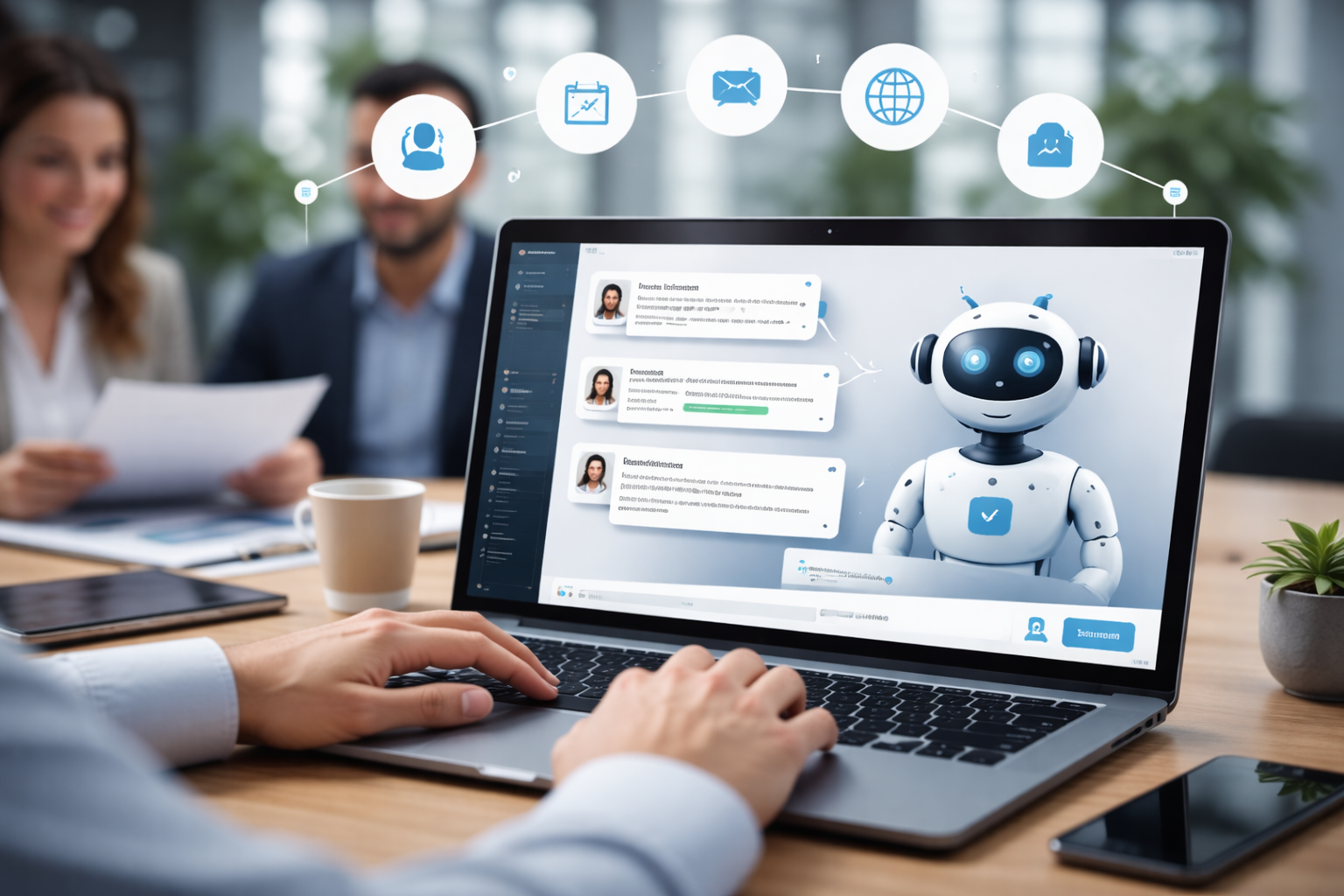
Chatbots in recruitment are transforming how organizations interact with candidates and manage hiring workflows. In today’s competitive job market, companies must respond quickly, provide a smooth candidate experience, and handle large volumes of applications. However, traditional communication methods often create delays and inefficiencies.
Because of this, many organizations are adopting chatbots in recruitment to automate candidate interactions. As a result, recruiters can engage applicants instantly while reducing manual workload. In turn, hiring teams can focus on strategic tasks and improve overall efficiency.
What Are Chatbots in Recruitment?
Chatbots in recruitment are AI-powered tools designed to simulate human conversation and assist with hiring tasks. In simple terms, they interact with candidates through chat interfaces on websites, messaging apps, or career portals.
Instead of relying on manual communication, recruiters can use chatbots to answer questions, collect information, and guide candidates through the application process. Additionally, these systems can operate 24/7, ensuring continuous engagement.
In most cases, chatbots integrate with applicant tracking systems and other HR tools. Therefore, they become a key part of modern recruitment workflows.
Why Chatbots in Recruitment Are Important
Recruitment teams often face communication challenges, especially when handling large volumes of candidates. Many organizations are improving efficiency and communication through automation, as explained in this article on how recruitment chatbots streamline hiring. However, delayed responses can negatively impact candidate experience.
For this reason, chatbots in recruitment play a critical role in modern hiring. By automating communication, they improve response times and enhance engagement. Consequently, organizations can build stronger relationships with candidates.
Key Benefits
- First, instant responses to candidate inquiries
- Additionally, improved candidate engagement
- At the same time, reduced recruiter workload
- Furthermore, consistent communication across applicants
- Finally, enhanced candidate experience
Overall, these benefits help companies create a more efficient hiring process.
How Chatbots in Recruitment Work
Understanding how these tools function can help organizations implement them effectively.
Candidate Interaction
First, chatbots engage with candidates through messaging interfaces.
Data Collection
Next, they collect information such as contact details, experience, and preferences.
Automated Responses
In addition, chatbots answer frequently asked questions instantly.
Workflow Integration
At the same time, they connect with recruitment systems to update candidate records.
Continuous Learning
Over time, AI improves chatbot responses based on user interactions.
As a result, chatbots become more accurate and helpful.
Best Chatbots in Recruitment in 2026
Several platforms are leading innovation in recruitment automation. Below are some of the top tools available today.
1. Paradox
Uses conversational AI to automate candidate engagement and scheduling.
Best For: High-volume hiring
2. HireVue
Combines chatbots with video interviews and assessments.
Best For: Enterprise hiring
3. XOR
Focuses on automation and candidate communication.
Best For: Recruiting teams
4. Olivia
Provides conversational AI for recruitment workflows.
Best For: Talent acquisition teams
5. Mya
Automates candidate engagement and screening.
Best For: Large organizations
6. Zoho Recruit
Includes chatbot features within a broader hiring platform.
Best For: Small to mid-sized businesses
7. SmartRecruiters
Offers chatbot integrations for automated hiring workflows.
Best For: Growing companies
How to Choose the Right Chatbot for Recruitment
Choosing the right solution depends on your hiring needs. Therefore, it is important to evaluate key factors.
Define Your Goals
To begin with, identify whether you need candidate engagement, screening, or scheduling.
Evaluate AI Capabilities
Next, look for chatbots with strong natural language processing.
Consider User Experience
At the same time, ensure the chatbot provides a smooth interaction.
Check Integration Options
Ensure compatibility with your existing HR systems.
Plan for Scalability
Looking ahead, choose a solution that can grow with your organization.
Review Pricing
Finally, compare pricing plans to find the best value.
Trends in Recruitment Chatbots
Technology continues to evolve, and chatbots are becoming more advanced. As a result, companies are adopting smarter solutions.
Conversational AI
Over time, chatbots are becoming more human-like in interactions.
Multichannel Communication
Meanwhile, chatbots operate across websites, messaging apps, and social platforms.
Personalization
In contrast to generic responses, modern chatbots provide personalized experiences.
Integration with AI Tools
Importantly, chatbots are integrating with other AI recruitment tools.
Common Mistakes to Avoid
Even with advanced tools, mistakes can occur. However, these can be avoided.
- For example, relying too heavily on automation
- In addition, ignoring candidate experience
- Another mistake is poor chatbot design
- Similarly, failing to train AI systems
- Finally, not monitoring performance
Ultimately, balancing automation with human interaction leads to better results.
Conclusion
Chatbots in recruitment are redefining how companies hire talent. In summary, these tools automate communication, improve engagement, and streamline workflows.
By adopting chatbot technology, organizations can reduce hiring time and enhance candidate experience. Moving forward, companies that leverage chatbots in recruitment will gain a competitive advantage in the talent market.