

Imagine walking onto the floor of a world-class manufacturing facility where high-tech systems hum in perfect alignment, raw materials flow smoothly through a highly calibrated pipeline, and finished products emerge with zero wasted movement. To keep production moving, operational leaders relentlessly eliminate every bottleneck, catch every defective piece before it ruins the next stage, and run the entire system at peak velocity. Now, contrast that smooth, predictable flow with the typical state of corporate talent acquisition, which often struggles with slow, unpredictable pipelines. To break this logjam, progressive enterprise teams are abandoning manual methods and adopting autonomous recruitment as their new operational framework.
For decades, human resources leaders have tolerated a messy, highly unpredictable process. For instance, open jobs frequently sit vacant for months. At the same time, dark applicant tracking databases bury valuable resumes. Consequently, exceptional candidates drop out of the process simply out of sheer boredom or a total lack of timely communication.
Treating hiring like a chaotic, slow-moving craft just does not cut it anymore. Instead, as an AI Solutions Architect and HR Technology Architect, I view the talent acquisition pipeline as a critical production engine. In fact, it directly dictates corporate growth. Therefore, to build a resilient workforce, organizations must treat hiring with the exact same operational rigor as advanced manufacturing.
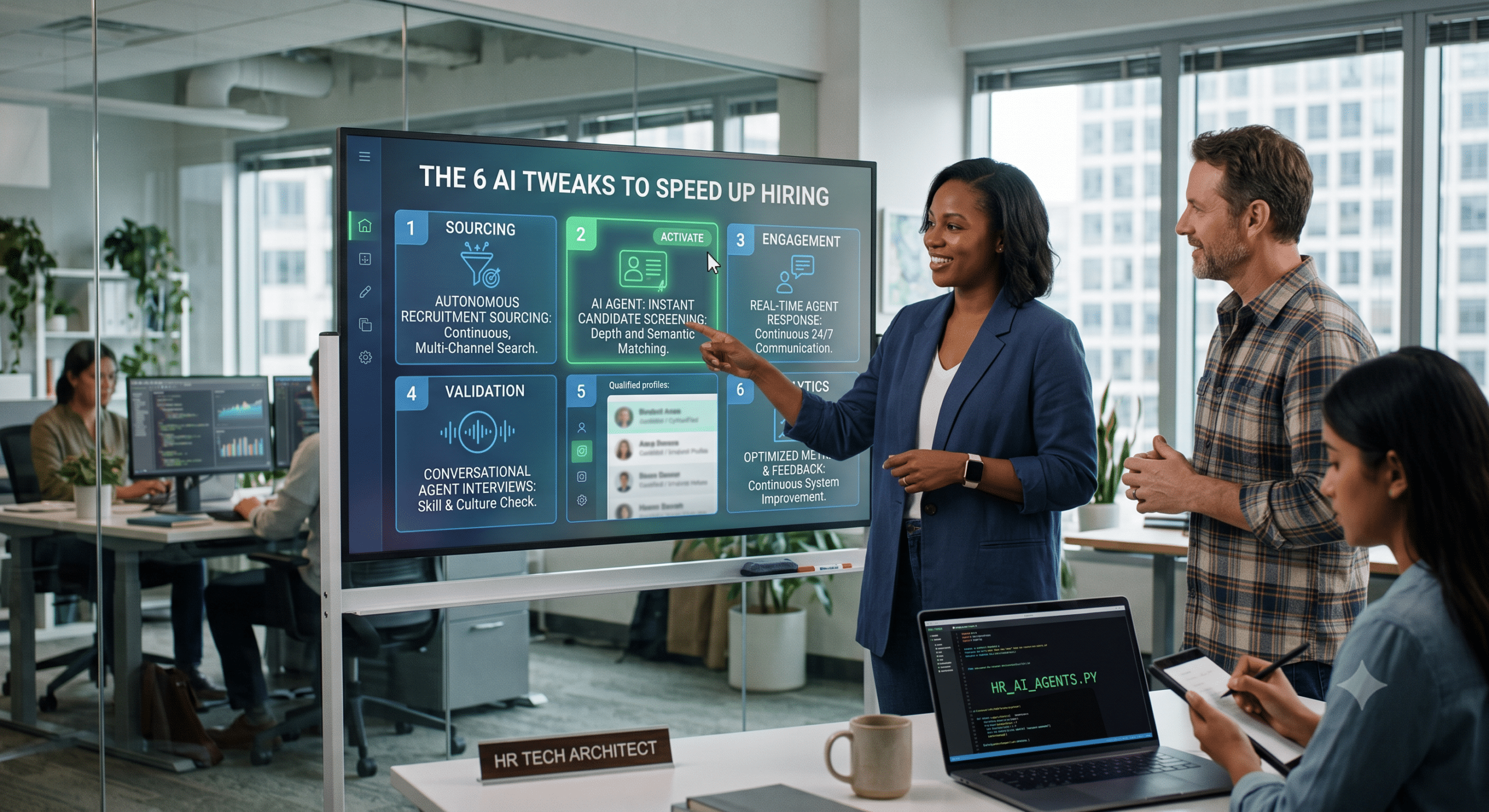
Ultimately, transforming the hiring process requires applying core industrial engineering metrics to talent acquisition pipelines. We must maximize throughput, compress cycle times, and aggressively drive the scrap rate down to near zero. However, manual human labor alone cannot achieve this level of precision. That is why forward-thinking companies are shifting away from rigid software rules and adopting autonomous recruitment solutions. These modern systems operate as independent, goal-oriented agents. Furthermore, they continuously manage and optimize the hiring pipeline from end to end.
1. Redefining the Talent Supply Chain Through Advanced Industrial Metrics
To understand how autonomous recruitment fundamentally shifts organizational capability, we must first change how we measure success within human resources. Specifically, the traditional metrics that talent acquisition teams use are lagging indicators. For example, generic time-to-fill or cost-per-hire averages fail to reveal why a hiring pipeline is broken. Instead, software and HR technology architects focus on operational throughput. This represents the total volume of highly qualified candidates successfully passing through the recruitment funnel within a given timeframe. As a benefit, high throughput ensures that business units are never left short-handed. In addition, it guarantees that teams staff critical roles before production delays can affect the corporate bottom line.
Alongside throughput stands cycle time. This is the absolute duration a single candidate needs to progress from the initial touchpoint of sourcing to the final extended job offer. Clearly, when cycle times stretch out over weeks, the talent pipeline suffers from what industrial engineers call inventory holding costs. In the recruiting world, indeed, these costs manifest as disengaged candidates and lost revenue from unfilled roles.
Finally, the most critical metric to optimize is the scrap rate. This defines the percentage of candidates who enter the recruiting funnel but face disqualification later. Typically, these dropouts happen due to poor profile matching, communication errors, or hiring manager rejections late in the process. Therefore, high scrap rates indicate that a company wastes a massive amount of corporate energy, time, and money on processing the wrong profiles. Inevitably, this waste clogs the calendar and slows the entire organization down. By comparison, using these three pillars to analyze the funnel lets us systematically replace manual friction. We can then introduce a modern autonomous recruitment framework designed to maintain a continuous, high-yield flow of top-tier talent.
2. Eliminating Intake Inertia and Accelerating Sourcing Velocity
The talent acquisition process frequently experiences its first major bottleneck before a job opening ever goes live online. For one thing, the traditional intake alignment meeting routinely takes days, if not weeks, to schedule and finalize. This delay between a corporate recruiter and a busy hiring manager subsequently creates immediate drag on the hiring cycle time.
Fortunately, specialized autonomous recruitment agents eliminate this inertia by conducting asynchronous, highly contextual intake sessions. To do this, they connect through everyday communication channels. These agents do not simply scan a rigid list of required skills. On the contrary, they dynamically cross-reference the actual operational performance history of past successful hires within the organization. Next, they analyze current market compensation realities and automatically generate highly optimized, accurate job descriptions that match true team needs.
Once the team establishes the operational criteria, the automated sourcing engine engages without requiring human triggers. From there, it works continuously every hour of the week. Instead of waiting for applicants to stumble across a job board, these specialized agents scan multiple networks simultaneously. Specifically, they pull from external professional platforms, open-source repositories, and internal candidate databases while utilizing deep semantic matching to uncover hidden talent.
By extension, by analyzing career trajectories and project histories, the system surfaces qualified individuals. Moreover, it even notes subtle public indicators of professional mobility and initiates highly tailored outreach campaigns. As a result, this level of continuous execution shifts the sourcing phase from a slow, reactive scramble into a highly predictable, high-throughput machine. Ultimately, this application of autonomous recruitment delivers top-tier candidates to the screening stage in hours rather than weeks.
3. Compressing Screening Cycles and Driving Down Pipeline Scrap Rates
The initial screening phase is historically where the highest volume of operational waste occurs within the corporate hiring process. Indeed, human recruiters tasked with manually evaluating hundreds of applications inevitably face cognitive fatigue. Consequently, this leads to inconsistent evaluations, missed talent, and a remarkably high scrap rate. In turn, recruiters drop good profiles, and poor matches slip through to the interview stage.
To solve this, intelligent agents address this operational defect by executing deep, high-context screening evaluations instantly. Importantly, this module of autonomous recruitment takes over the moment a candidate profile enters the pipeline. Rather than relying on simplistic keyword matching that resume formatting can easily manipulate, these agents read applications with a comprehensive understanding of core competencies. Thus, they evaluate project scale and industry nuance while providing detailed summaries of candidate suitability.
In order to drive the pipeline scrap rate down even further, the system can deploy conversational voice or interactive chat systems. Specifically, these networks conduct immediate, natural validation interviews with highly qualified applicants. These interactions then allow the system to probe deeply into complex professional experiences. For example, they ask detailed follow-up questions regarding architectural decisions, technical hurdles, and specific project outcomes.
Consequently, by filtering out individuals who look impressive on paper but lack the practical experience required for the role, the automated process ensures that human interviewers only receive pristine, fully validated profiles. Undoubtedly, this rigorous, multi-stage screening compression drastically reduces the time a candidate spends waiting in the pipeline. Above all, it completely neutralizes the zero-idle-time bottleneck that frequently kills candidate engagement.
4. Orchestrating Frictionless Coordination to Protect Throughput
Even the most optimized sourcing and screening engines will fail if the candidate experience stalls during interview coordination. After all, the back-and-forth communication required to align calendars between multiple interviewers and an active candidate creates a notorious operational black hole. Inevitably, it stretches cycle times and causes top-tier talent to abandon the process out of pure frustration.
Thankfully, intelligent hiring software removes this coordination barrier entirely. To achieve this, it directly integrates with corporate calendar infrastructure and candidate schedules to orchestrate interviews in real time. Furthermore, if a conflict arises or an interviewer cancels unexpectedly at the last minute, the system dynamically reschedules the session. Immediately, it shifts panel structures and updates all parties instantly without requiring a human coordinator to intervene.
Beyond the mechanics of scheduling, these software tools act as the connective tissue that keeps the entire hiring pipeline moving at peak velocity. Specifically, they actively monitor the progress of every candidate through the funnel. Meanwhile, they automatically nudge internal hiring managers who delay submitting interview feedback. Simultaneously, the software also escalates high-priority talent to expedited status if the system detects indicators of competitive interest.
By doing so, the system prevents excellent candidates from falling through the cracks of a distracted organization. In the end, this continuous, background optimization ensures that the flow of talent through the interview ecosystem remains uninterrupted. Therefore, it maximizes total operational throughput while preserving the time of the human recruiting team for high-value strategic conversations.
5. Architectural Blueprints for Scaling Autonomous Talent Infrastructure
Integrating an automated, intelligent framework into an existing corporate environment requires shifting away from legacy software platforms. Granted, users value the traditional Applicant Tracking System as a static database of record. However, the industry never designed it to act as an automated system of action capable of running independent workflows.
Therefore, to transition to a modern talent engine, enterprise technology architects must implement an advanced orchestration layer based on autonomous recruitment principles. Specifically, this layer sits directly on top of legacy databases. From there, it connects sourcing networks, communication channels, and internal scheduling platforms through highly resilient webhooks and application programming interfaces. As a result, this architectural framework allows systems to ingest raw candidate data seamlessly. They can then execute multi-step screening logic and push real-time status updates back to the core database without breaking existing compliance workflows.
Importantly, when deploying this advanced layer, corporate leadership must establish a structured framework. For instance, human recruiters must remain firmly in control of final hiring decisions while allowing the software to manage the manual workflows. Clearly, the technological system explicitly handles the heavy lifting of sourcing, qualification, data structuring, and calendar coordination. Nevertheless, the ultimate validation of cultural alignment, compensation negotiation, and final selection remains a uniquely human capability.
Furthermore, organizations can embed automated data-masking protocols directly into the early screening algorithms. By doing this, the system strips out non-job-related personal indicators early in the evaluation process. Consequently, this architectural design ensures that the system judges every profile strictly on documented competency and technical merit. Ultimately, it helps enterprise companies maintain compliance with global labor regulations while scaling their hiring infrastructure through robust autonomous recruitment pipelines.
6. The Long-Term Yield of an Autonomous Hiring Operation
Transitioning a corporate talent acquisition function from manual processing to an autonomous recruitment model delivers massive operational advantages. In fact, these benefits directly impact enterprise profitability. By comparison, by treating the hiring funnel as a highly calibrated production environment, organizations can reliably compress their overall hiring cycle times by more than fifty percent. Consequently, this shift allows companies to fill critical engineering, product, and operational roles in days rather than months.
Commercial benefit follows immediately, as this dramatic increase in pipeline velocity prevents productivity loss across business units. As a result, it ensures that the organization can capitalize on market opportunities far ahead of slower-moving competitors.
Simultaneously, the near-total elimination of pipeline scrap rates means that human resources teams stop wasting valuable capital. For example, they no longer spend hours processing, interviewing, and rejecting misaligned candidate profiles. Instead, every dollar spent on the talent acquisition infrastructure goes toward identifying and engaging high-yield professionals. Undoubtedly, these individuals possess the exact skills required to drive company growth.
In conclusion, embedding autonomous recruitment into the core corporate strategy completely transforms talent acquisition. Essentially, it turns an unpredictable, administrative cost center into a highly optimized, high-throughput engine. In a business environment where the speed of execution determines market leadership, the organizations that build automated talent pipelines will consistently secure the best minds in the industry. Meanwhile, they will leave legacy teams buried under a mountain of unread resumes.
Frequently Asked Questions
What exactly is the difference between standard recruitment automation and autonomous recruitment?
Standard recruitment automation relies entirely on rigid, pre-defined rules. For instance, an example includes automatically sending a generic rejection email when an applicant answers “no” to a specific background question. Therefore, it cannot adapt to changing contexts and requires a human recruiter to manually trigger almost every stage of the process.
In contrast, autonomous recruitment utilizes intelligent AI agents that operate independently toward a broader goal. Specifically, these systems analyze context and make strategic execution decisions across multiple platforms. Furthermore, they adjust their communication cadences based on candidate behavior and manage multi-step hiring workflows from initial sourcing to interview scheduling without needing constant human intervention.
How does autonomous recruitment actively reduce the pipeline scrap rate?
Mainly, the system drives down the scrap rate by replacing superficial keyword matching with deep semantic screening and natural language interactions. To do this, specialized autonomous recruitment agents evaluate the deeper context of a candidate’s full career history, projects, and specific technical achievements rather than just scanning for buzzwords.
Additionally, these systems can instantly deploy conversational screening interactions. As a result, this validates technical capabilities and role alignment before a human interviewer ever takes a booking, thereby filtering out misaligned profiles early. Ultimately, this step ensures that the candidates who reach the final stages are highly qualified, preventing wasted interview time and reducing late-stage rejections.
Will the implementation of autonomous hiring agents eliminate the need for human recruiters?
No, these software models are designed to eliminate the highly repetitive, administrative tasks that consume up to eighty percent of a recruiter’s daily routine. For example, these chores include cold sourcing, candidate tracking, and coordinate scheduling.
By comparison, by offloading these manual bottlenecks to autonomous infrastructure, human talent professionals gain the freedom to focus entirely on the high-value aspects of the role. Naturally, these tasks require true human empathy and strategic judgment. Specifically, this includes building strong personal relationships with candidates, aligning hiring strategies with executive business leaders, navigating complex compensation negotiations, and closing top-tier talent.
How does this technology handle candidate privacy and compliance with global employment laws?
Architects build modern autonomous recruitment frameworks with privacy and compliance at the core of their design. For example, teams can configure these systems to automatically strip out identifying personal data from applicant profiles during the initial screening stages. Consequently, this feature ensures that the system evaluates individuals purely on their core competencies, professional experience, and technical merit.
Furthermore, engineers can fully map the integration layer to adhere to local labor regulations, data retention policies, and international compliance standards like the EU AI Act. As a result, this setup provides automated, transparent audit logs for every screening action the software takes.
References for Further Reading
-
Phenom Blog: AI Recruiting in 2026: The Definitive Guide to Agentic Frameworks – An extensive exploration of how specialized AI agents operate across modern enterprise talent acquisition infrastructure to compress operational cycle times.
-
Recruiterflow Blog: Guide to AI Agents in Recruitment (2026 Edition) – A deep dive into the practical architecture of agentic workflows and how autonomous systems differ from legacy automation tools.
-
Suitable AI Blog: Autonomous Recruiting Velocity: Key Metrics You Need to Track – An analytical breakdown of modern recruiting metrics, focusing on the mechanics of zero-idle time, pipeline throughput, and operational efficiency.