


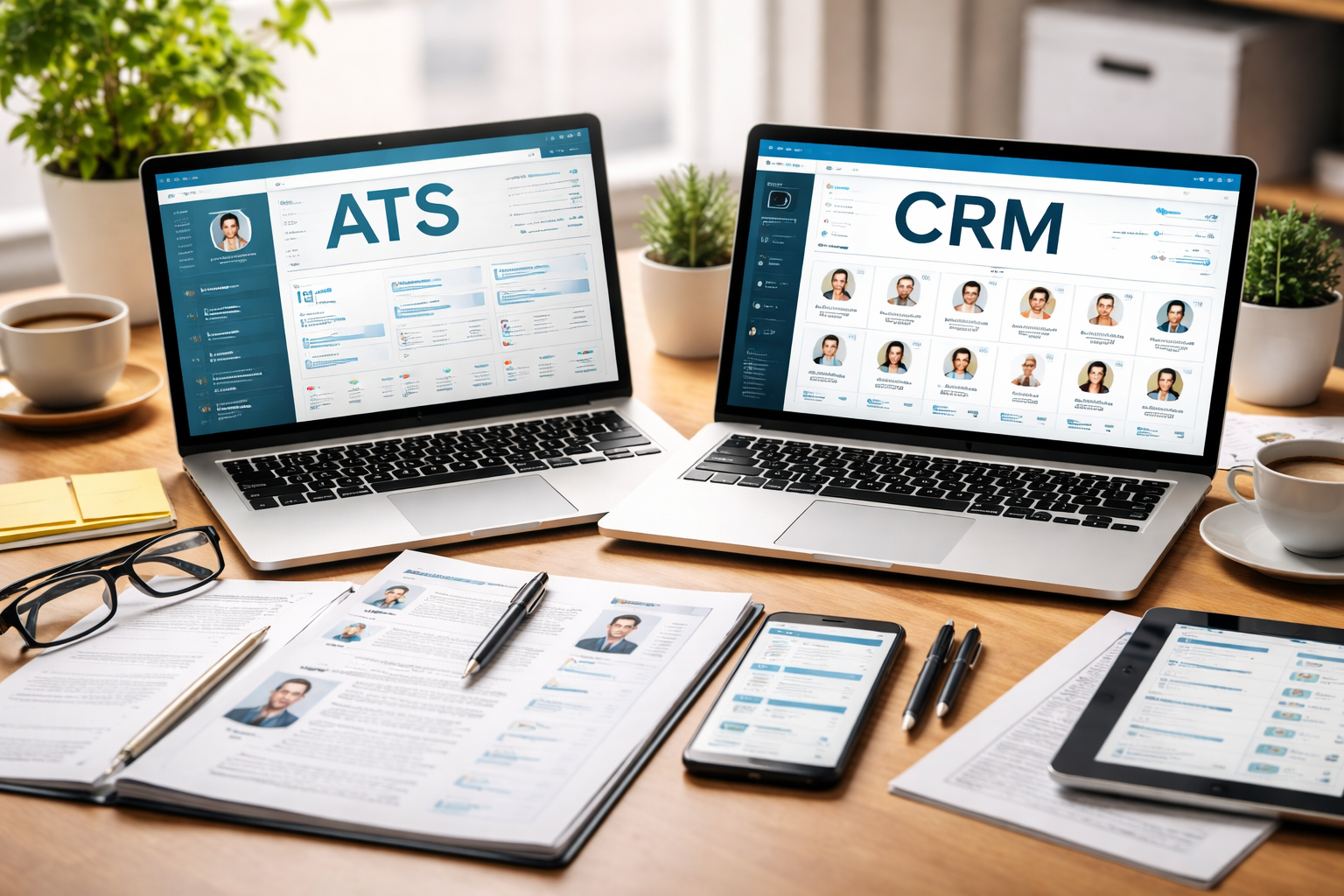
Understanding ATS vs CRM recruitment helps businesses choose the right tools for managing hiring workflows and building strong talent pipelines. To better understand this comparison, exploring the difference between ATS and CRM can provide useful insights into how each system works.
Selecting the right tools has become more important than ever. One of the most important comparisons in modern hiring is ATS vs CRM recruitment, which helps organizations improve their hiring strategies. By understanding how these systems work, companies can enhance recruitment performance and achieve better results.
What Is ATS vs CRM Recruitment?
ATS vs CRM recruitment refers to the comparison between two essential hiring systems: Applicant Tracking Systems (ATS) and Candidate Relationship Management (CRM) platforms.
An ATS focuses on managing candidates who have already applied. In contrast, a CRM is designed to engage and nurture potential candidates before they apply. Because of this difference, each system plays a unique role in the recruitment funnel. In addition, both tools complement each other when used together.
Simply put, ATS manages applications, while CRM builds long-term relationships.
What Is an ATS?
An Applicant Tracking System (ATS) is software that helps recruiters manage job applications and streamline hiring workflows.
Key Features:
- Job posting across multiple platforms
- Resume screening and parsing
- Candidate tracking and status updates
- Interview scheduling
- Workflow automation
Benefits:
Recruiters can process applications faster and reduce manual work. Additionally, teams stay organized and collaborate more effectively. As a result, hiring becomes more structured and efficient. Moreover, automation reduces errors and improves consistency.
ATS is ideal for handling active applicants. Therefore, it is commonly used in high-volume hiring environments.
What Is a Recruitment CRM?
A Recruitment CRM focuses on building relationships with candidates over time rather than managing immediate applications.
Key Features:
- Talent pool management
- Automated email campaigns
- Candidate engagement tracking
- Employer branding tools
- Passive candidate sourcing
Benefits:
Organizations can engage candidates before job openings arise. Furthermore, recruiters can build a strong talent pipeline and improve long-term hiring success. Because of this, companies are better prepared for future hiring needs. At the same time, CRM tools help maintain consistent communication.
CRM works best for engaging passive candidates. As a result, it supports proactive recruitment strategies.
ATS vs CRM Recruitment: Key Differences
To better understand ATS vs CRM recruitment, here is a clear comparison:
| Feature | ATS | CRM |
|---|---|---|
| Purpose | Manage applicants | Build relationships |
| Candidate Type | Active | Passive |
| Focus | Hiring workflow | Candidate engagement |
| Timeline | Immediate hiring | Long-term pipeline |
| Automation | Process automation | Communication automation |
How ATS and CRM Work Together
Many companies do not choose between ATS and CRM. Instead, they combine both systems to create a complete hiring strategy.
First, CRM tools attract and engage potential candidates.
Next, interested candidates apply for open roles.
After that, the ATS manages applications and hiring workflows.
Finally, both systems share data to improve decision-making.
This approach ensures a seamless recruitment process. Over time, it also improves efficiency and hiring outcomes.
Benefits of ATS vs CRM Recruitment
Using both systems together offers several advantages.
1. Complete Recruitment Coverage
Organizations can manage every stage of hiring. In other words, they can handle both sourcing and selection within one strategy. As a result, the process becomes more efficient.
2. Improved Candidate Experience
CRM keeps candidates engaged throughout the journey. Meanwhile, ATS ensures a smooth and structured application process. Because of this, candidates are more likely to complete the hiring process.
3. Strong Talent Pipeline
Building a talent pool becomes easier with CRM tools. Therefore, companies can fill roles faster when positions become available. In addition, this reduces hiring delays.
4. Faster Hiring Process
ATS reduces delays by automating screening and scheduling. Consequently, recruiters can make quicker decisions. In turn, this improves overall hiring speed.
5. Data-Driven Insights
Both systems provide valuable data. As a result, recruiters can refine their strategies and improve hiring performance. Furthermore, data helps identify areas for improvement.
When to Use ATS vs CRM
Choosing the right system depends on your hiring goals.
ATS When:
- If you are actively hiring, an ATS helps you manage the entire application process efficiently
- When handling a high volume of applications, it keeps everything organized and easy to track
- Additionally, it provides structured workflows that improve consistency in hiring
CRM When:
- If your goal is to engage passive candidates, a CRM allows you to build relationships over time
- When developing a talent pipeline, it helps you stay connected with potential hires
- Moreover, it supports long-term hiring strategies and employer branding
Both When:
- If you want a complete recruitment strategy, combining both systems covers all stages of hiring
- As your business grows, both tools provide the scalability needed to manage increasing demand
- Ultimately, using both improves efficiency and delivers better hiring results
Ultimately, combining both systems delivers the best results.
ATS vs CRM Recruitment for Different Businesses
Different organizations benefit in different ways.
Startups:
Early-stage companies often begin with an ATS. However, adding a CRM becomes important as hiring grows. Over time, this improves scalability.
Mid-Sized Businesses:
These companies benefit from using both systems. As a result, they achieve a balance between speed and engagement.
Enterprises:
Large organizations use integrated systems. In addition, they focus on automation and global hiring. Therefore, they gain a competitive advantage.
Challenges of ATS vs CRM Recruitment
Despite their advantages, these systems come with challenges.
Integration can be complex. Additionally, teams may require training to use both systems effectively. Initial setup costs can also be a concern. However, proper planning helps overcome these issues. In the end, the benefits outweigh the challenges.
Best Practices for ATS vs CRM Recruitment
To maximize results, consider the following strategies:
1. Integrate Your Systems
Ensure both tools work together seamlessly. This helps avoid data silos and improves efficiency.
2. Balance Automation and Human Interaction
Automation improves efficiency. However, human interaction remains essential. For example, personalized communication builds trust.
3. Focus on Candidate Experience
Clear communication improves engagement. For instance, timely updates reduce candidate drop-off. As a result, candidates stay engaged.
4. Track Key Metrics
Monitor important data such as:
- Time-to-hire
- Engagement rates
- Conversion rates
By doing this, you can improve your hiring strategy. In addition, data supports better decision-making.
5. Continuously Improve
Use insights to refine your approach. Over time, this leads to better hiring outcomes. Ultimately, continuous improvement drives success.
Future Trends in ATS vs CRM Recruitment
Technology continues to shape the future of hiring.
AI-powered tools are improving candidate matching. At the same time, predictive analytics helps recruiters make better decisions. Furthermore, personalized engagement is becoming more common. As a result, recruitment will become more efficient and data-driven.
Which Is Better: ATS or CRM?
The answer depends on your needs.
An ATS is essential for managing applications. Meanwhile, a CRM is valuable for building relationships. Therefore, using both systems together is the most effective approach. In most cases, integration delivers the best results.
Conclusion
Understanding ATS vs CRM recruitment allows businesses to build a smarter hiring system. While ATS focuses on managing applications, CRM emphasizes engagement. Together, they create a balanced strategy that improves efficiency and supports long-term growth. In the end, companies that use both systems gain a strong competitive advantage.