

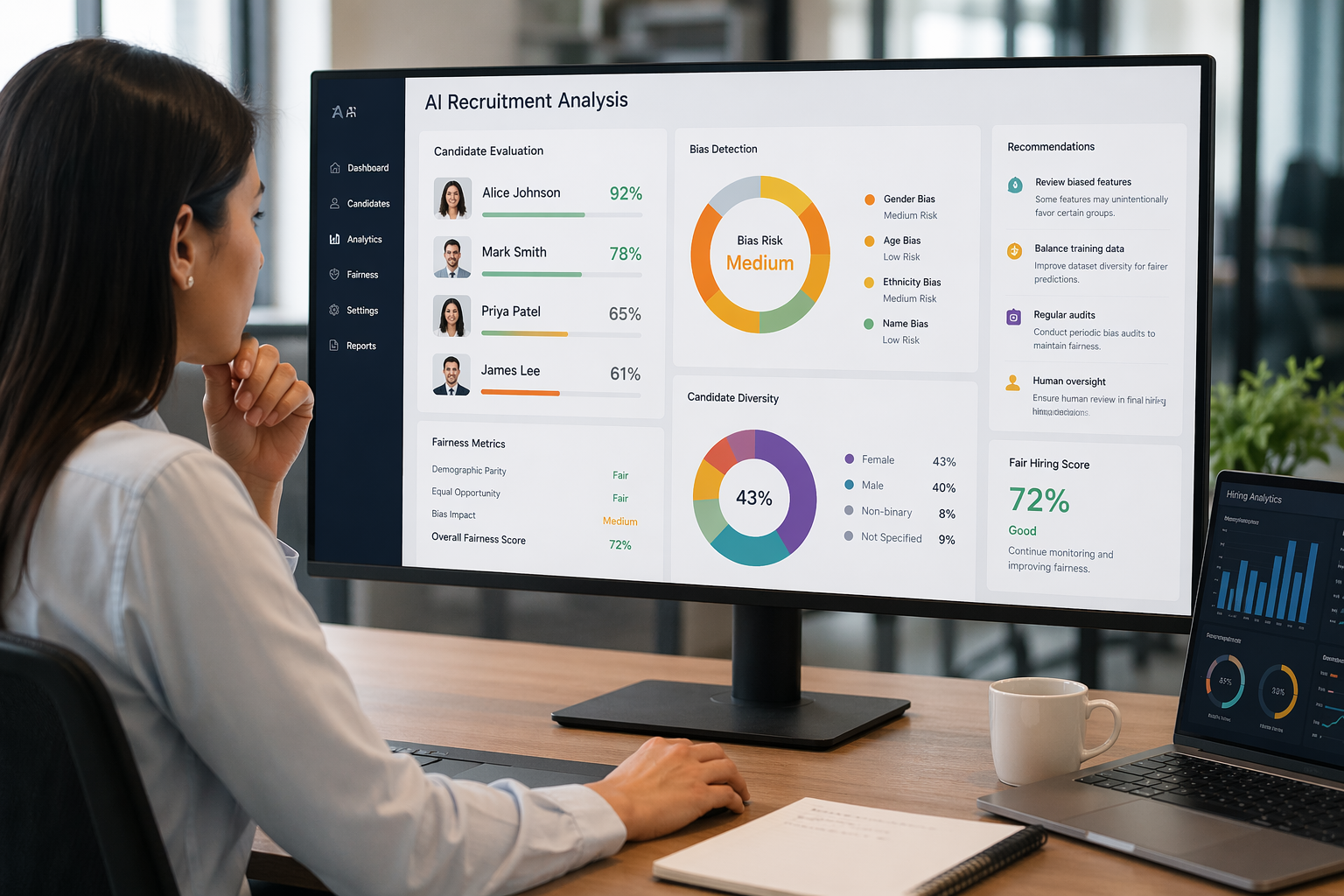
Artificial intelligence is transforming recruitment at scale. From resume screening to predictive hiring analytics, AI-powered tools promise speed, efficiency, and better decision-making. However, alongside these benefits comes a critical challenge: AI bias in recruitment.
Bias in AI systems can reinforce inequalities, exclude qualified candidates, and expose organizations to legal and reputational risks. In 2026, companies are under increasing pressure to ensure their hiring processes are not only efficient but also fair, transparent, and ethical.
This guide explores what AI bias in recruitment is, why it happens, real-world risks, and how organizations can prevent it while still benefiting from machine learning technologies.
What Is AI Bias in Recruitment?
AI bias in recruitment refers to systematic and unfair discrimination embedded within AI-driven hiring systems. AI systems learn from historical hiring data, which often reflects existing inequalities. As highlighted in the MIT Sloan analysis AI Is Reinventing Hiring — With the Same Old Biases, these systems can unintentionally replicate and scale past discrimination if not carefully designed. These biases occur when algorithms produce skewed outcomes that favor or disadvantage certain groups based on factors such as gender, ethnicity, age, education, or background.
Unlike human bias, which may be unconscious but variable, AI bias can be consistent, scalable, and harder to detect—making it particularly dangerous.
AI systems learn from historical data. If past hiring decisions were biased, the AI model may replicate or even amplify those patterns.
Why AI Bias Happens
Understanding the root causes of AI bias is essential for preventing it. Most issues stem from data, design, or deployment practices.
1. Biased Training Data
AI models rely on historical data to learn patterns. If that data reflects past discrimination, the system inherits those biases.
Example:
If a company historically hired more male candidates for technical roles, the AI may favor male applicants—even if gender is not explicitly included.
2. Proxy Variables
Even when sensitive attributes (like race or gender) are removed, other variables can act as proxies.
Examples include:
- Zip codes (linked to socioeconomic or ethnic demographics)
- School names
- Employment gaps
These indirect signals can still lead to biased outcomes.
3. Algorithm Design Flaws
Poorly designed models may prioritize the wrong features or overfit to biased patterns in the data.
4. Lack of Diverse Development Teams
When AI systems are built without diverse perspectives, blind spots can go unnoticed during development and testing.
5. Feedback Loops
AI systems can reinforce their own decisions over time.
Example:
If an AI consistently favors a certain candidate profile, future hiring data will reflect that bias, strengthening the pattern.
Types of AI Bias in Recruitment
AI bias can manifest in different ways across the hiring process.
1. Gender Bias
Algorithms may favor one gender over another based on historical hiring patterns.
2. Racial or Ethnic Bias
Bias can emerge through proxy data such as names, locations, or education background.
3. Age Bias
Older candidates may be unfairly filtered out if the system prioritizes recent experience or certain career paths.
4. Educational Bias
Candidates from prestigious institutions may be favored, excluding equally skilled individuals from less recognized schools.
5. Socioeconomic Bias
AI may indirectly favor candidates from privileged backgrounds due to access to opportunities.
Real-World Impact of AI Bias
AI bias in recruitment is not just theoretical—it has real consequences.
1. Reduced Diversity
Biased systems limit diversity in hiring, which can negatively impact innovation and company performance.
2. Legal and Compliance Risks
Organizations may face lawsuits or penalties if their hiring practices are found to be discriminatory.
3. Damage to Employer Brand
Candidates are increasingly aware of ethical hiring practices. Bias can harm reputation and deter top talent.
4. Missed Talent Opportunities
Qualified candidates may be overlooked due to flawed algorithmic decisions.
Benefits of Addressing AI Bias
Mitigating AI bias is not just about compliance—it also delivers strategic advantages.
1. Fairer Hiring Decisions
Reducing bias leads to more equitable outcomes.
2. Improved Talent Quality
Organizations gain access to a broader and more diverse talent pool.
3. Stronger Employer Branding
Ethical hiring practices attract high-quality candidates.
4. Better Business Performance
Diverse teams are proven to be more innovative and effective.
How to Detect AI Bias in Recruitment
Identifying bias is the first step toward eliminating it.
1. Audit Hiring Outcomes
Analyze hiring data for patterns:
- Are certain groups consistently underrepresented?
- Are rejection rates uneven across demographics?
2. Use Fairness Metrics
Common metrics include:
- Disparate impact ratio
- Equal opportunity difference
- Demographic parity
3. Conduct Algorithm Testing
Test models with diverse datasets to evaluate fairness across groups.
4. Monitor in Real Time
Continuously track AI decisions to detect emerging biases early.
How to Reduce AI Bias in Recruitment
Organizations must take a proactive approach to minimize bias.
1. Use Diverse and Representative Data
Ensure training data reflects a wide range of candidates and backgrounds.
2. Remove Sensitive and Proxy Variables
Identify and eliminate variables that could introduce bias.
3. Implement Explainable AI
Use models that provide transparency into decision-making processes.
4. Conduct Regular Audits
Periodic reviews help identify and correct bias over time.
5. Combine AI with Human Oversight
AI should support—not replace—human decision-making.
Recruiters should:
- Review AI recommendations
- Challenge questionable outcomes
- Ensure fairness
6. Establish Ethical AI Guidelines
Organizations should define clear policies for:
- Fairness
- Accountability
- Transparency
Best Practices for Ethical AI Hiring
To build a responsible AI hiring strategy, follow these best practices:
1. Prioritize Skills-Based Hiring
Focus on competencies rather than background or credentials.
2. Involve Cross-Functional Teams
Include HR, data scientists, legal experts, and diversity advocates.
3. Document AI Decisions
Maintain records of how hiring decisions are made.
4. Educate Recruiters
Train hiring teams to understand AI limitations and risks.
5. Choose Ethical Vendors
Select tools that prioritize fairness and compliance.
AI Bias vs Human Bias
| Factor | Human Bias | AI Bias |
|---|---|---|
| Consistency | Variable | Highly consistent |
| Scale | Limited | Scalable |
| Transparency | Often hidden | Can be opaque |
| Control | Hard to standardize | Easier to audit (if designed properly) |
Both forms of bias must be addressed for a truly fair hiring process.
Regulatory Landscape in 2026
Governments are introducing stricter regulations around AI in hiring.
Key Trends:
- Mandatory AI audits
- Transparency requirements
- Candidate rights to explanation
- Data privacy compliance
Organizations must stay updated to avoid legal risks.
Future of AI and Bias in Recruitment
The future of AI hiring is moving toward ethical, transparent, and human-centered systems.
Emerging Trends:
1. Fairness-First AI Models
New algorithms are designed to prioritize equity alongside performance.
2. Real-Time Bias Monitoring
Advanced tools will detect and correct bias instantly.
3. Increased Regulation
Global standards for AI ethics will become more defined.
4. Human-AI Collaboration
Recruiters and AI will work together to achieve better outcomes.
Conclusion
AI bias in recruitment is one of the most important challenges facing modern hiring. While AI offers powerful advantages, it must be implemented responsibly to avoid reinforcing inequality.
Organizations that prioritize fairness, transparency, and accountability will not only reduce risk but also gain a competitive advantage in attracting and retaining top talent.
By combining ethical AI practices with human judgment, companies can build hiring systems that are both efficient and fair—shaping a more inclusive future of work.