


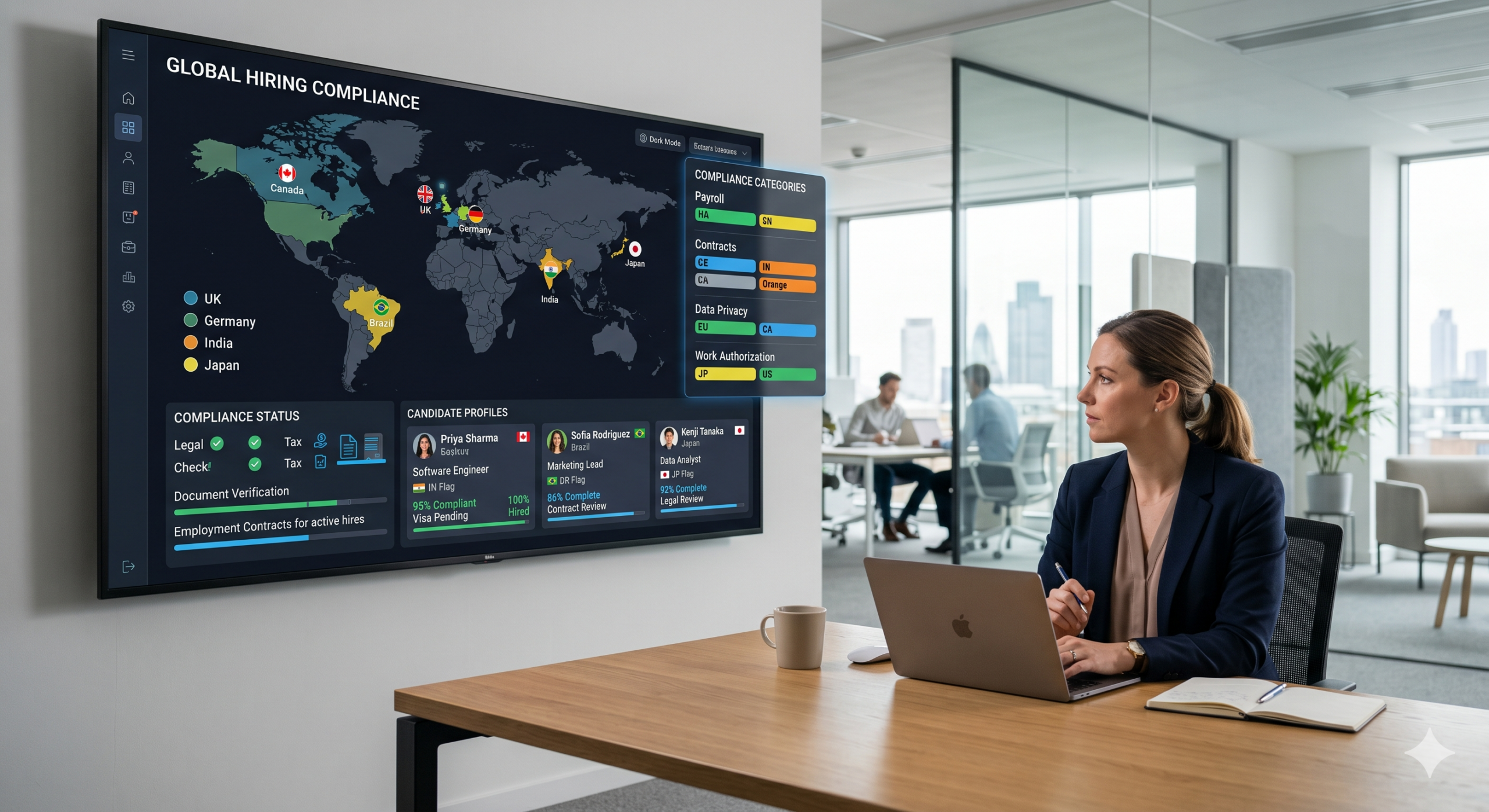
In a borderless workforce, international hiring compliance has become a mission-critical capability. Companies can now access talent anywhere, but each hire introduces legal, tax, and data obligations that vary by country. This international hiring compliance guide explains how to hire globally while staying compliant, reducing risk, and maintaining operational efficiency.
Whether you are expanding into new markets or building a fully distributed team, mastering international hiring compliance ensures your growth is sustainable, lawful, and scalable.
What Is International Hiring Compliance?
International hiring compliance refers to the legal, regulatory, and administrative requirements organizations must follow when hiring employees or contractors across borders. International hiring compliance involves meeting legal, tax, and regulatory requirements across multiple jurisdictions. For a deeper understanding of the broader compliance landscape, refer to HR Compliance: The Expert Guide, which explains how organizations manage legal obligations across different regions.
It covers:
- Employment laws and worker classification
- Payroll, taxes, and social contributions
- Contracts and benefits
- Data privacy and security
- Immigration and work authorization
The goal is to ensure that every global hire meets the legal standards of the country where the employee resides.
Why International Hiring Compliance Matters in 2026
Global hiring is growing fast, but so are enforcement and penalties. Strong international hiring compliance practices protect your business and your people.
1. Avoid Legal Penalties
Non-compliance can lead to fines, lawsuits, and operational shutdowns.
2. Protect Your Brand
Compliance demonstrates professionalism and builds trust with candidates and partners.
3. Enable Global Expansion
You can enter new markets confidently when your compliance framework is solid.
4. Improve Employee Experience
Clear contracts, correct pay, and benefits increase satisfaction and retention.
Key Areas of International Hiring Compliance
A robust compliance program spans several domains.
1. Employment Laws by Country
Every country has different rules for:
- Working hours and overtime
- Minimum wage
- Termination and notice periods
- Leave and holidays
2. Worker Classification
Misclassification is one of the biggest risks.
- Employees receive benefits and protections
- Independent contractors have different obligations
Incorrect classification can trigger penalties and back payments.
3. Payroll and Tax Compliance
Employers must:
- Withhold income taxes
- Pay social security contributions
- Comply with local payroll regulations
4. Data Privacy Regulations
Handling employee data requires compliance with laws like:
- GDPR (Europe)
- Local data protection laws
5. Employment Contracts
Contracts must include:
- Compensation
- Job responsibilities
- Termination terms
- Benefits
6. Immigration and Work Authorization
For cross-border hires relocating or working in regulated roles:
- Work permits and visas may be required
Common Challenges in International Hiring Compliance
Despite its importance, many organizations struggle with international hiring compliance.
1. Complex Legal Landscape
Regulations vary significantly across countries and change frequently.
2. Lack of Local Expertise
Without in-country knowledge, companies risk non-compliance.
3. Administrative Burden
Managing payroll, contracts, and reporting across regions is time-consuming.
4. Rapid Scaling Risks
Fast hiring can lead to shortcuts and compliance gaps.
Step-by-Step International Hiring Compliance Process
A structured process helps maintain consistency and reduce risk.
Step 1: Define Hiring Model
Choose the right approach:
- Direct employment
- Contractor model
- Employer of Record (EOR)
Step 2: Research Local Laws
Understand:
- Labor regulations
- Tax requirements
- Employment standards
Step 3: Classify Workers Correctly
Determine whether the role qualifies as:
- Employee
- Contractor
Step 4: Set Up Payroll and Tax Systems
Ensure:
- Accurate salary payments
- Proper tax deductions
- Compliance with local reporting
Step 5: Draft Compliant Contracts
Use localized contracts that meet legal requirements.
Step 6: Ensure Data Protection
Implement secure systems to manage employee data.
Step 7: Monitor and Audit Compliance
Regularly review:
- Payroll accuracy
- Legal updates
- Internal processes
Tools for International Hiring Compliance
Technology simplifies compliance and reduces risk.
1. Employer of Record (EOR) Platforms
Handle legal employment, payroll, and compliance.
2. Global Payroll Systems
Automate payments and tax calculations.
3. HR Management Software
Centralize employee data and workflows.
4. Compliance Management Tools
Track regulations and updates across countries.
5. Document Management Systems
Store contracts and compliance records securely.
Best Practices for International Hiring Compliance
1. Work with Local Experts
Legal advisors and consultants provide country-specific guidance.
2. Standardize Processes
Create consistent workflows across regions.
3. Use Technology
Automate compliance tasks to reduce errors.
4. Stay Updated on Regulations
Monitor changes in labor laws and tax rules.
5. Train HR Teams
Ensure recruiters and HR professionals understand compliance requirements.
International Hiring Compliance vs Local Hiring
| Feature | Local Hiring | International Hiring Compliance |
|---|---|---|
| Regulations | Single country | Multiple jurisdictions |
| Complexity | Low | High |
| Risk | Lower | Higher |
| Scalability | Limited | Global |
| Compliance Needs | Basic | Advanced |
Common Mistakes to Avoid
1. Misclassifying Workers
Leads to penalties and legal issues.
2. Ignoring Local Laws
Each country has unique requirements.
3. Poor Documentation
Incomplete records increase risk during audits.
4. Delayed Compliance Updates
Regulations change frequently and must be tracked.
5. Overlooking Data Privacy
Failure to protect employee data can result in serious penalties.
How to Build a Global Compliance Strategy
1. Develop a Compliance Framework
Create policies covering all hiring activities.
2. Centralize Data Management
Use unified systems for global operations.
3. Establish Clear Workflows
Define processes for hiring, payroll, and reporting.
4. Use EOR or Local Entities
Choose the right structure based on business needs.
5. Conduct Regular Audits
Identify and fix compliance gaps early.
Future Trends in International Hiring Compliance
1. AI-Driven Compliance Monitoring
AI will track regulatory changes and automate reporting.
2. Increased Global Regulation
Governments will introduce stricter labor and tax laws.
3. Digital Compliance Platforms
More advanced tools will simplify global hiring.
4. Remote Work Regulations
New policies will address cross-border remote employment.
5. Real-Time Compliance Analytics
Organizations will use dashboards to monitor compliance status.
Conclusion
It is essential for organizations that want to scale globally without risk. By understanding legal requirements, using the right tools, and implementing structured processes, companies can hire international talent confidently.
This guide provides a complete framework for navigating global hiring challenges. Businesses that prioritize compliance will not only avoid risks but also build trust, improve employee experience, and achieve sustainable growth.
As global work continues to evolve, mastering compliance will be a key driver of success in the modern workforce.