


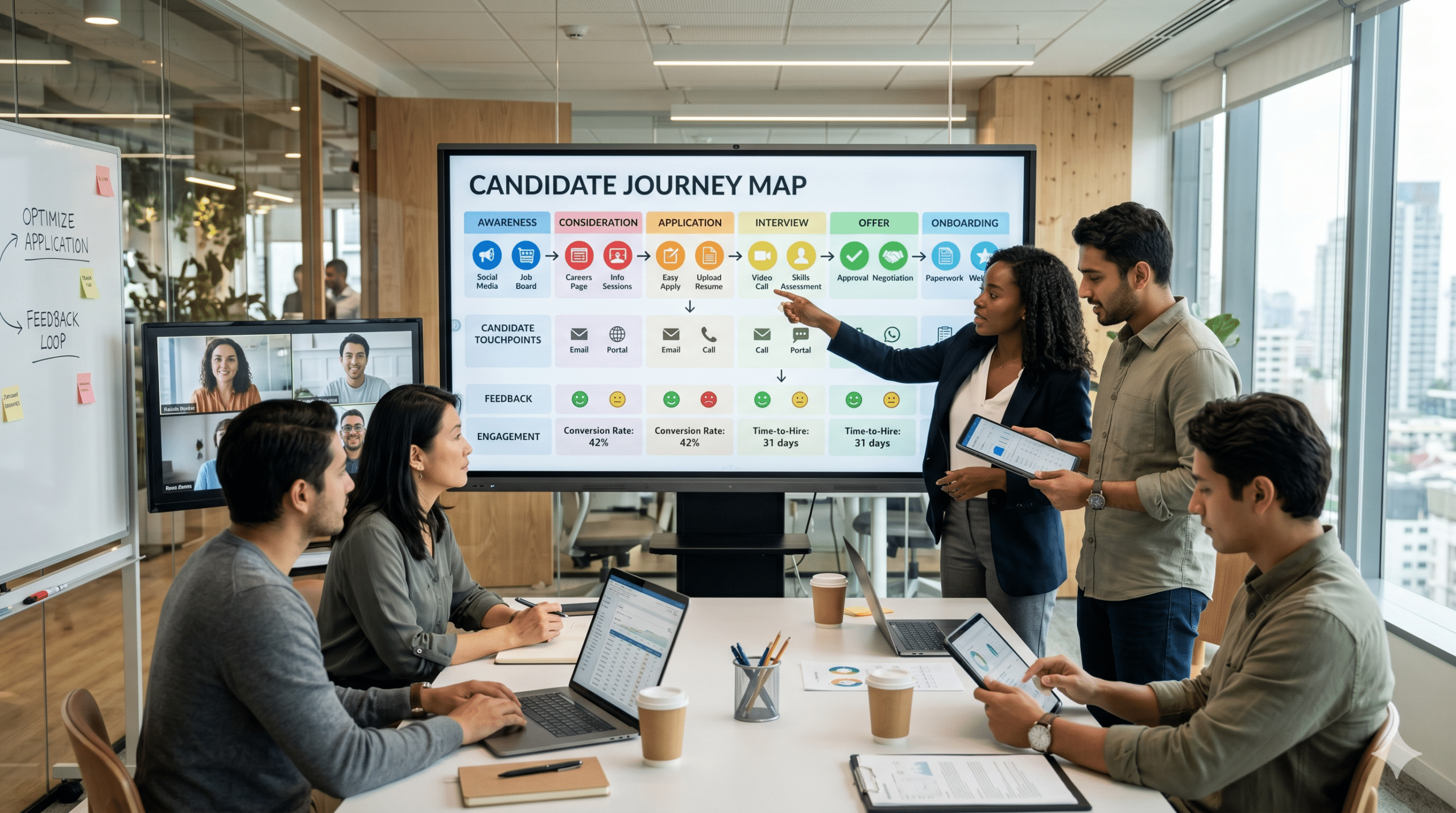
Candidate journey mapping has become a critical strategy for modern recruitment. In 2026, candidates expect a seamless, personalized, and engaging hiring experience. Organizations that fail to deliver this risk losing top talent to competitors.
Today’s hiring landscape is highly candidate-driven. Job seekers evaluate companies based on their experience at every touchpoint—from first interaction to final offer. Candidate journey mapping helps organizations understand and improve this experience, ensuring better engagement and higher conversion rates.
In this guide, you will learn what candidate journey mapping is, why it matters, and how to build an effective strategy that improves hiring outcomes.
What Is Candidate Journey Mapping?
Candidate journey mapping is the process of visualizing and analyzing every interaction a candidate has with your organization throughout the hiring process. It identifies key touchpoints, pain points, and opportunities for improvement. To better understand how to visualize and optimize the hiring experience, it’s helpful to explore a comprehensive candidate journey mapping guide that explains each stage, touchpoint, and improvement strategy.
This approach allows companies to design a smoother, more engaging experience that aligns with candidate expectations.
Why Candidate Journey Mapping Is Important in 2026
1. Improves Candidate Experience
A well-mapped journey ensures a positive and consistent experience.
2. Increases Conversion Rates
Better experiences lead to more applications and accepted offers.
3. Enhances Employer Branding
Positive experiences strengthen your reputation as an employer.
4. Reduces Drop-Off Rates
Identifying friction points helps keep candidates engaged.
Key Stages of the Candidate Journey
Understanding the stages of job application journey is essential.
1. Awareness
Candidates first discover your company through:
- Job ads
- Social media
- Employer branding
2. Consideration
Candidates research your company and evaluate opportunities.
3. Interest
Candidates engage with your content and explore job openings.
4. Application
Candidates submit applications and enter the hiring process.
5. Selection
Interviews, assessments, and evaluations take place.
6. Offer
Candidates receive and consider job offers.
7. Onboarding
Successful candidates transition into employees.
How to Create a Candidate Journey Map
Step 1: Define Candidate Personas
Identify your ideal candidates based on:
- Skills
- Experience
- Career goals
Step 2: Identify Touchpoints
Map every interaction candidates have with your company.
Step 3: Analyze Candidate Experience
Evaluate what candidates experience at each stage.
Step 4: Identify Pain Points
Find areas where candidates face challenges or drop off.
Step 5: Optimize Each Stage
Improve processes to create a smoother journey.
Step 6: Use Data and Feedback
Continuously refine your strategy based on insights.
Candidate Journey Mapping Strategies
1. Personalize Communication
Tailor messages based on candidate preferences and behavior.
2. Use Automation
Automate repetitive tasks to improve efficiency.
3. Improve Application Process
Simplify forms and reduce unnecessary steps.
4. Enhance Communication
Keep candidates informed throughout the process.
5. Provide Feedback
Offer constructive feedback to candidates.
6. Leverage Technology
Use tools like:
- Applicant tracking systems (ATS)
- Candidate relationship management (CRM)
- Analytics platforms
Benefits of Candidate Journey Mapping
Better Candidate Experience
Creates a positive impression of your company.
Higher Hiring Efficiency
Streamlines processes and reduces delays.
Improved Talent Quality
Attracts candidates who are better aligned with your organization.
Stronger Employer Brand
Consistent experiences build trust and credibility.
Common Mistakes to Avoid
Ignoring Candidate Feedback
Feedback provides valuable insights for improvement.
Overcomplicating the Process
Complex processes discourage candidates.
Lack of Communication
Poor communication leads to frustration.
Inconsistent Experience
Ensure consistency across all touchpoints.
Best Practices for Candidate Journey Mapping
Be Candidate-Centric
Focus on the needs and expectations of candidates.
Use Data-Driven Insights
Leverage analytics to improve decisions.
Maintain Transparency
Keep candidates informed at every stage.
Continuously Improve
Regularly update your journey map.
Role of Technology in Candidate Journey Mapping
Technology plays a key role in enhancing the candidate experience.
AI and Automation
Improve personalization and efficiency.
Analytics Tools
Track candidate behavior and performance.
CRM Systems
Manage candidate relationships effectively.
Chatbots
Provide instant responses to candidate queries.
Future Trends in Candidate Journey Mapping
Hyper-Personalization
Tailored experiences for individual candidates.
AI-Driven Insights
Advanced analytics for better decision-making.
Mobile-First Experiences
Optimized processes for mobile users.
Candidate Experience Platforms
Integrated tools for managing the entire journey.
Measuring Success
Track key metrics such as:
- Application completion rate
- Time-to-hire
- Candidate satisfaction
- Offer acceptance rate
How Candidate Journey Mapping Supports Recruitment
Improving recruitment by:
- Enhancing candidate engagement
- Reducing hiring friction
- Improving conversion rates
- Strengthening employer branding
Conclusion: Building a Better Candidate Experience
Itis essential for organizations that want to succeed in modern recruitment. By understanding and optimizing every touchpoint, companies can create a seamless and engaging experience that attracts and retains top talent.
In 2026, organizations that prioritize candidate experience will gain a competitive advantage and build stronger, more effective hiring strategies.