

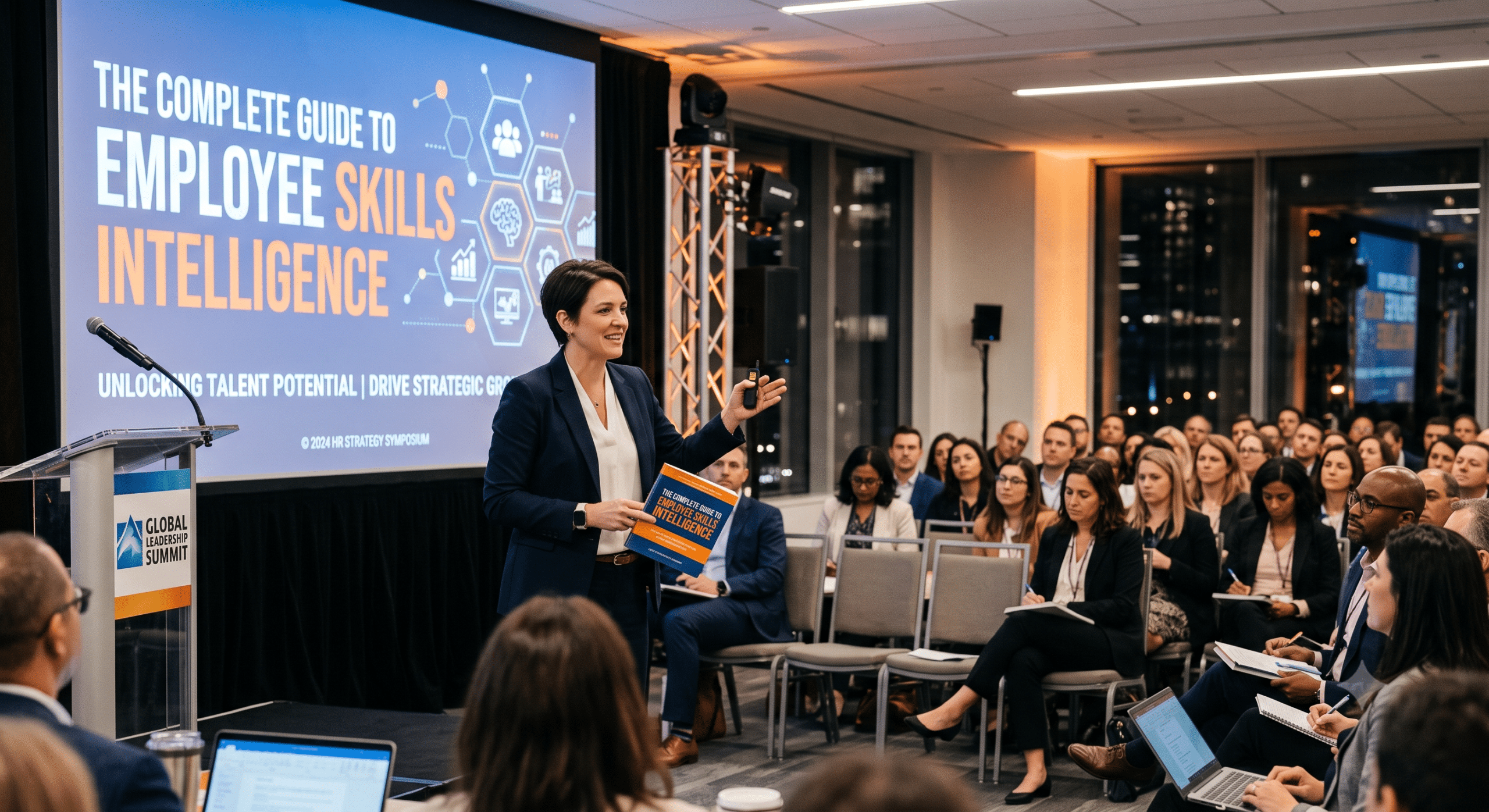
If you ask most business leaders what their biggest workforce challenge is today, many will point to the critical need for employee skills intelligence to find and retain people with the right capabilities. Indeed, hiring has become vastly more competitive, technology changes faster than ever, and employees expect continuous opportunities to learn and grow. Because of these rapid shifts, companies can no longer rely on resumes, job titles, or years of experience alone.
Ultimately, adopting a dedicated intelligence framework is what transforms talent management into a total game changer.
As a Talent Intelligence Consultant, I’ve seen organizations invest millions of dollars in recruiting while simultaneously overlooking one of their greatest assets—the skills they already have inside their workforce. In reality, many businesses don’t actually have a talent shortage. Instead, they have a visibility problem. Specifically, they simply don’t know what skills exist across their employees, which skills are missing, and which skills will matter most over the next few years.
What Is Employee Skills Intelligence?
Employee skills intelligence is the dynamic process of collecting, organizing, analyzing, and continuously updating information about the skills employees possess.
Unlike traditional HR databases that focus mainly on job titles and static employment history, employee skills intelligence focuses on what people can actually do on a daily basis.
Generally, this includes:
-
Technical skills
-
Leadership abilities
-
Soft skills
-
Certifications
-
Industry knowledge
-
Language proficiency
-
Project experience
-
Emerging skills
Instead of viewing employees as mere job descriptions, organizations begin viewing them as dynamic collections of valuable capabilities. Consequently, this mindset shift creates better workforce decisions across the entire employee lifecycle.
A Practical Example
Consider a software engineer on your team. On paper, they are simply a coder; however, they might also possess:
-
Project management experience
-
Data analytics knowledge
-
AI certifications
-
Public speaking skills
-
Product management expertise
Without employee skills intelligence, however, these cross-functional capabilities often remain completely hidden from leadership.
Why Talent Intelligence Platforms Matter More Than Ever
Today, several compounding workplace trends have made skills intelligence an urgent business priority.
1. Technology Changes Faster Than Job Titles
New technologies emerge every year. For instance, artificial intelligence, automation, cloud computing, cybersecurity, and data science continue changing the fundamental types of skills companies need. Because job descriptions written two years ago may already be outdated, skills intelligence allows organizations to adjust their strategy much faster.
2. Internal Talent Is Often Underused
External hiring is notoriously expensive. Furthermore, recruiting takes a significant amount of time. In truth, many organizations already employ people who could seamlessly fill open roles with minimal training. Without skills intelligence, nevertheless, these qualified employees are rarely identified. By contrast, Talent Intelligence Platforms make internal mobility effortless by matching employee capabilities with urgent business needs.
3. Skills Expire Faster
Years ago, technical skills remained useful for a decade or more. Today, however, many digital skills evolve within just a few years. Therefore, employee skills intelligence helps organizations monitor which capabilities remain valuable and which require proactive upskilling.
4. Employees Crave Meaningful Career Growth
Modern employees don’t simply want vertical promotions; instead, they want continuous opportunities to learn, take on challenging work, and build meaningful career paths. Accordingly, companies that understand employee skills can recommend personalized development plans that naturally boost engagement and retention.
What Is a Talent Intelligence Platform?
A Talent Intelligence Platform combines workforce data, artificial intelligence, analytics, and skills mapping into one centralized ecosystem. Rather than storing static HR records, these platforms continuously update workforce intelligence in real time.
Typically, data sources include:
-
HR systems & Recruiting software
-
Learning management systems (LMS)
-
Performance reviews & Skills assessments
-
Certifications & Employee profiles
-
Internal project history
The platform then analyzes this information to create a living skills profile for every individual. Thus, instead of manually reviewing static spreadsheets, HR leaders receive instant, real-time insights.
The Difference Between HR Data and Employee Skills Intelligence
Many organizations believe they already understand their workforce simply because they have standard HR software. Unfortunately, traditional HR systems answer only basic, transactional questions.
| Traditional HR Systems Answer: | Employee Skills Intelligence Answers: |
| Where does someone work? | Which employees know Python? |
| What’s their salary? | Who possesses hidden leadership potential? |
| What’s their department? | Which specific teams lack cybersecurity skills? |
| What’s their manager’s name? | Who could smoothly transition into data analytics or support AI initiatives? |
Clearly, that represents a completely different level of strategic workforce visibility.
The 8 Core Components of Employee Skills Intelligence
As a Talent Intelligence Consultant, I usually recommend that organizations build their operational strategy around eight essential components.
[1. Discovery] ──> [2. Taxonomy] ──> [3. Validation] ──> [4. Gap Analysis]
                                                               │
[8. Predictive AI] <── [7. Planning] <── [6. Learning] <── [5. Marketplace]
1. Skills Discovery
First, companies must identify existing capabilities. To achieve this, information is gathered through resume parsing, self-assessments, manager feedback, certifications, and AI-powered inference to create a detailed talent inventory.
2. Skills Taxonomy
Different employees often describe identical skills in different ways. For example, one employee might write SQL, another Structured Query Language, and another Database Querying. Therefore, a Talent Intelligence Platform standardizes these terms into one consistent taxonomy, which significantly improves reporting accuracy.
3. Skills Validation
Not every listed skill reflects true expertise. Hence, validation occurs through manager verification, practical assessments, verified certifications, project outcomes, and peer endorsements to ensure maximum confidence in the data.
4. Skills Gap Analysis
Organizations regularly compare current capabilities against future goals. For instance, if an enterprise currently has 120 cloud engineers but forecasts a future need for 185, they discover a clear gap of 65 professionals. Instead of waiting until hiring becomes desperate, the company can immediately begin upskilling internal talent.
5. Internal Talent Marketplace
Moreover, one of the most powerful features within these platforms is the internal marketplace. Employees automatically receive personalized recommendations for:
-
New cross-functional projects
-
Temporary gig assignments
-
Stretch roles and mentoring opportunities
As a result, valuable talent stays inside the organization rather than leaving for competitors.
6. Personalizing Learning Recommendations
Skills intelligence connects directly with internal learning platforms. Consequently, instead of assigning identical courses to everyone, employees receive targeted recommendations based on their current skills, desired career trajectory, and organizational goals.
7. Strategic Workforce Planning
Executive leaders require visibility into future talent risks. In this context, skills intelligence answers crucial questions regarding retirement risks, disappearing skills, and reskilling priorities, thereby supporting long-term business resilience.
8. Predictive Workforce Intelligence
Finally, modern platforms leverage AI to predict upcoming trends. Rather than merely reacting to shortages, organizations can forecast high-demand roles, attrition risks, and emerging capabilities well in advance.
How AI Elevates Employee Skills Intelligence
Artificial intelligence has radically transformed Talent Intelligence Platforms. Instead of relying entirely on manual data entry, modern AI continuously uncovers hidden insights from:
-
Unstructured performance reviews
-
Internal documentation and collaboration tools
-
Project outputs and learning records
Example: Suppose an employee regularly participates in cybersecurity projects, even if “cybersecurity” isn’t formally listed on their profile. The AI recognizes this underlying experience, automatically flags the hidden capability, and prompts skill validation.
Common Challenges Organizations Face (and How to Overcome Them)
Despite the clear benefits, implementing employee skills intelligence isn’t always seamless. However, recognizing these potential obstacles early can help you mitigate them effectively.
-
Inconsistent Skills Data: Because employees describe experience differently—or neglect updating their profiles entirely—workforce analytics can become unreliable. To fix this, AI standardization is vital.
-
Limited Employee Participation: Occasionally, employees worry that skills tracking will be used for punitive performance evaluations rather than career development. Therefore, clear communication is essential: explain that the platform exists to unlock growth, learning, and internal promotions.
-
Disconnected Systems: Many companies store data across disconnected HR tools. Consequently, integrating HRIS, recruiting software, and learning management systems often becomes a primary prerequisite for success.
Real Business Benefits Across the Lifecycle
While hiring certainly improves, the long-term value reaches much further. Specifically, employee skills intelligence impacts every phase of the workforce lifecycle.
Recruiting ──> Onboarding ──> Internal Mobility ──> Reskilling ──> Succession Planning
Better Hiring Decisions
Although resumes and interviews still matter, they don’t always reveal the complete picture. Skills intelligence adds a deeper layer by pinpointing missing capabilities, transferable candidate skills, and internal alternatives before external offers are extended.
Stronger Internal Mobility & Retention
Employees rarely leave solely because they dislike their tasks; rather, they leave because they cannot see a clear future path. By providing personalized career recommendations, organizations retain institutional knowledge and dramatically boost loyalty.
Optimized Training Budgets
Many companies still assign broad, generic training across entire departments. However, this approach wastes resources. Instead, skills intelligence allows training to be personalized: Employee A focuses on advanced data analytics, while Employee B in the exact same department focuses on public speaking and project leadership.
Industry Applications: A Quick Comparison
To illustrate how versatile skills intelligence is across sectors, consider these brief real-world examples:
| Industry | Primary Use Case | Key Business Benefit |
| Healthcare | Tracking specialized certifications (nursing, critical care, licensure renewals). | Enhances patient care quality while preventing severe staffing compliance risks. |
| Manufacturing | Mapping robotics, equipment certifications, and safety qualifications. | Enables fast assignment of qualified personnel to new automated production lines. |
| Financial Services | Managing compliance training, risk management, and digital banking skills. | Ensures rapid operational adjustment to evolving regulatory mandates. |
| Retail | Managing seasonal shifts and cross-training staff across sales, inventory, and ops. | Creates dynamic workforce flexibility across peak customer seasons. |
| Technology | Monitoring fast-evolving fields like AI, cloud computing, and cybersecurity. | Maintains competitive advantage through proactive internal reskilling rather than expensive hiring. |
A Step-by-Step Implementation Roadmap
If your enterprise is ready to adopt a skills-first approach, follow this strategic roadmap:
-
Define Business Goals: First, clarify the specific problem you are solving—whether it is reducing attrition, accelerating AI adoption, or lowering recruitment costs.
-
Build a Standardized Skills Framework: Next, establish a shared taxonomy for technical skills, leadership capabilities, and industry certifications.
-
Gather & Consolidate Data: Integrate inputs from HR platforms, learning tools, certifications, and project histories.
-
Validate Capabilities: Combine manager reviews, peer endorsements, and objective assessments to ensure high data integrity.
-
Establish Continuous Maintenance: Since skills evolve rapidly, leverage AI platforms to continuously refresh workforce intelligence automatically over time.
Common Implementation Pitfalls to Avoid
Over the years, I have noticed several recurring mistakes that diminish platform ROI:
-
Focusing Exclusively on Recruiting: While external hiring benefits are obvious, the largest ROI almost always stems from internal mobility, retention, and workforce planning.
-
Ignoring the Employee Experience: If workers view the platform as an administrative burden, participation drops. Therefore, always highlight what’s in it for them—such as stretch assignments and promotion opportunities.
-
Treating Skills as Static: People learn every single day. Thus, viewing skills as a static one-time assessment renders your workforce intelligence obsolete within months.
How to Measure Success
Executives frequently ask how to evaluate platform ROI. To do so, monitor these key performance metrics across four critical areas:
┌──────────────────────────────┬──────────────────────────────┐
│       Hiring Metrics         │       Learning Metrics       │
│ • Lower time-to-hire         │ • Higher course completion   │
│ • Higher internal fill rates │ • Faster skill acquisition   │
├──────────────────────────────┼──────────────────────────────┤
│      Mobility Metrics        │      Retention Metrics       │
│ • Increased lateral moves    │ • Reduced voluntary turnover │
│ • Higher project mobility    │ • High-performer retention   │
└──────────────────────────────┴──────────────────────────────┘
The Future of Employee Skills Intelligence
Looking ahead, Talent Intelligence Platforms will evolve from passive analytics tools into active strategic advisors.
First, AI-powered skills inference will become far more sophisticated, detecting expertise natively from daily collaboration patterns. Second, organizations will increasingly transition to a pure skills-based structure, where work and projects are distributed based on verified capabilities rather than rigid titles. Finally, annual talent reviews will be completely replaced by real-time, continuous workforce intelligence.
Conclusion
In summary, employee skills are quickly becoming an enterprise’s most vital strategic asset. Ultimately, the organizations that succeed over the next decade won’t necessarily be those that hire the most people; rather, they will be those that make the smartest use of the talent they already have.
By shifting the conversation from “Who has this job title?” to “Who possesses the verified skills to solve this challenge?”, leaders can build a flexible, resilient, and future-ready organization. Therefore, investing in employee skills intelligence is no longer merely an option—it is a critical competitive advantage.
Frequently Asked Questions (FAQ)
1. What is employee skills intelligence?
It is the process of collecting, analyzing, and updating data regarding employees’ skills and capabilities. Consequently, it empowers businesses to make data-driven talent decisions.
2. How does it differ from broader talent intelligence?
Employee skills intelligence focuses specifically on internal talent capabilities. In contrast, general talent intelligence is broader, combining internal data with external labor market trends and competitor benchmarking.
3. Can AI really identify skills automatically?
Yes. Modern platforms analyze unstructured project documents, training records, and work outputs to infer and suggest relevant skills automatically.
4. How does this strategy boost internal mobility?
By matching verified employee capabilities directly with open roles, temporary assignments, and project needs, companies allow employees to grow internally instead of seeking opportunities elsewhere.
Here is the rewritten References section featuring top-tier, high-authority industry guides and articles on Skills and Talent Intelligence:
References
-
Phenom – Skills Intelligence: Build a Skills-Forward Workforce with AI
A comprehensive breakdown of building a dynamic skills ontology, deploying AI skills inference, and driving continuous workforce planning.
-
TechWolf – What is Skills Intelligence? The Complete Guide for HR Leaders
In-depth insights into AI-powered skills inference, taxonomy vs. ontology, and connecting HR tech ecosystems.
-
Skillsoft – What is Skills Intelligence?
Best practices for creating a dynamic skills architecture, evidence-based proficiency tracking, and closing capability gaps.
-
ClearCompany – How & Where to Start Using Skills Intelligence at Your Organization
A practical framework covering high-impact use cases across talent acquisition, L&D, and internal mobility.
-
Neobrain – Skills Intelligence: What Is It All About?
An overview of skills-centric culture, automated skills mapping, and measuring ROI in recruitment and internal mobility.
-
Juicebox – What is Talent Intelligence? A Practical Guide
A guide comparing talent intelligence with traditional HR analytics and explaining how internal workforce data integrates with external market signals.