

Remote work is no longer a trend—it is a core business strategy. In 2026, organizations across industries are embracing distributed teams to access global talent, reduce costs, and increase flexibility. However, hiring remotely introduces new complexities that require a structured and technology-driven approach.
This remote hiring guide explores how organizations can successfully recruit, evaluate, and onboard talent in a fully digital environment. In 2026, remote work is no longer a trend—it is a core business strategy that enables companies to access global talent, reduce operational costs, and improve workforce flexibility.
As hiring becomes more competitive and distributed, following a structured remote hiring guide is essential for building high-performing teams. This guide provides a comprehensive framework to help businesses streamline their recruitment process, improve candidate experience, and make smarter hiring decisions in a remote-first world.
What Is Remote Hiring?
Remote hiring is the process of recruiting, interviewing, and onboarding employees without requiring them to be physically present in a central office. It relies heavily on digital tools, virtual communication, and cloud-based systems.
Remote hiring includes:
- Virtual job postings and sourcing
- Online interviews and assessments
- Digital onboarding and training
This model enables organizations to hire talent from anywhere in the world.
Why Remote Hiring Matters in 2026
The shift toward remote work has fundamentally changed recruitment strategies. Remote hiring allows organizations to access a global talent pool, reduce costs, and accelerate hiring timelines. For a deeper look at global hiring strategies and trends, explore this Complete Guide to Remote Recruitment 2026, which outlines how companies are scaling distributed teams effectively.
1. Access to Global Talent
Companies are no longer limited by geography. You can hire the best candidates regardless of location.
2. Reduced Hiring Costs
Remote hiring eliminates expenses related to relocation, office space, and travel.
3. Faster Hiring Cycles
Digital tools streamline sourcing, screening, and interviewing.
4. Improved Employee Satisfaction
Remote roles offer flexibility, leading to higher engagement and retention.
Key Challenges of Remote Hiring
While remote hiring offers significant benefits, it also presents challenges.
1. Communication Barriers
Time zone differences and lack of face-to-face interaction can impact collaboration.
2. Candidate Evaluation Difficulties
Assessing soft skills and cultural fit remotely can be challenging.
3. Technology Dependence
Remote hiring relies heavily on stable internet connections and reliable tools.
4. Compliance and Legal Issues
Hiring across regions requires understanding local labor laws and tax regulations.
Step-by-Step Remote Hiring Process
A structured process ensures consistency and success.
Step 1: Define the Role Clearly
Start with a detailed job description:
- Responsibilities
- Required skills
- Performance expectations
Clearly outline whether the role is:
- Fully remote
- Hybrid
- Location-restricted
Step 2: Build a Remote Employer Brand
Candidates evaluate companies based on:
- Work culture
- Flexibility
- Growth opportunities
Highlight:
- Remote work policies
- Team collaboration tools
- Success stories of remote employees
Step 3: Source Candidates Effectively
Use multiple channels to find talent:
- Job boards
- Professional networks
- Social media platforms
Leverage AI-powered sourcing tools to identify passive candidates.
Step 4: Screen Candidates Efficiently
Initial screening can include:
- Resume analysis
- Pre-employment assessments
- AI screening tools
Focus on:
- Relevant experience
- Remote work readiness
- Communication skills
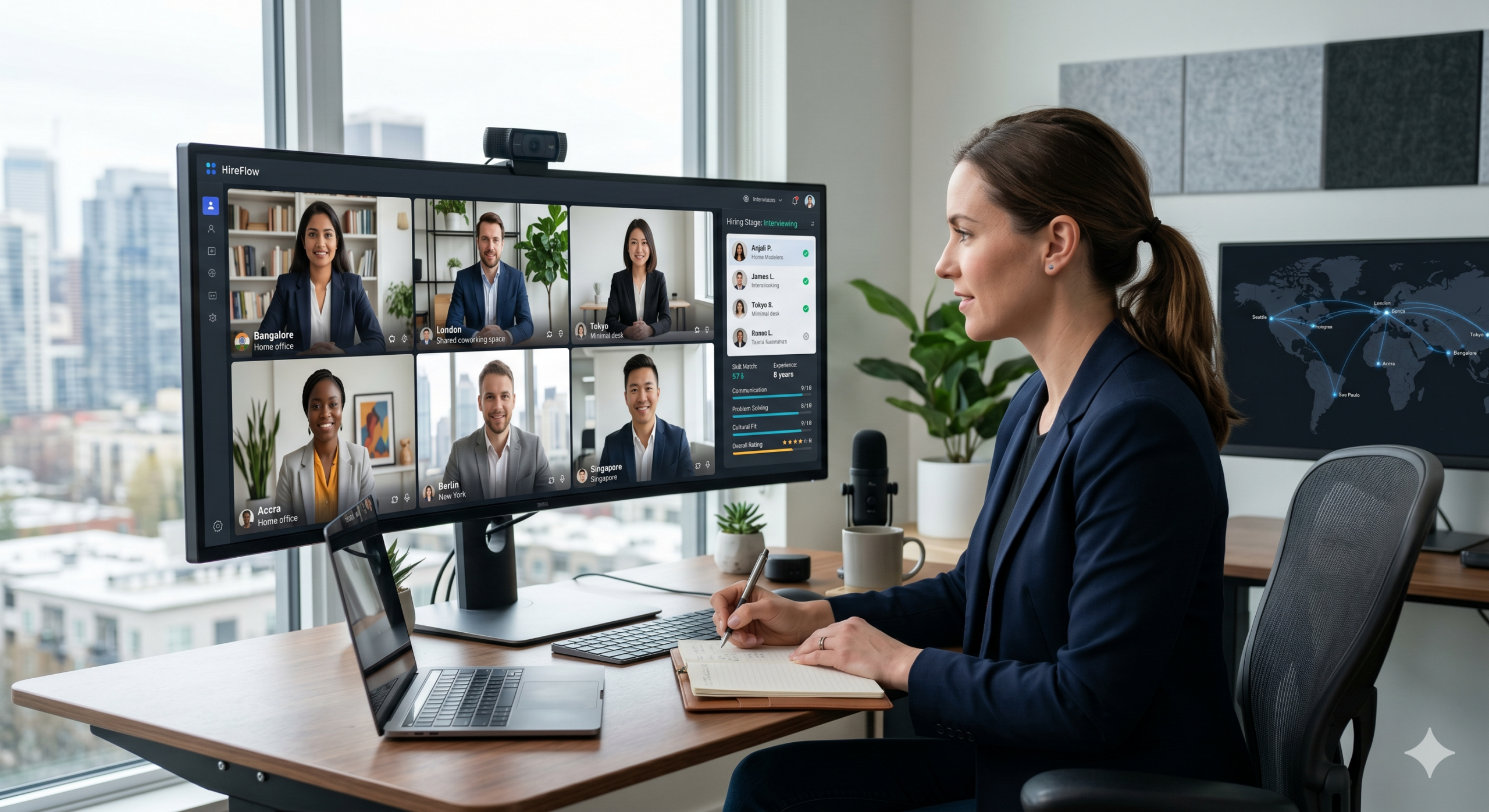
Step 5: Conduct Remote Interviews
Remote interviews are a critical stage in the hiring process.
Best Practices:
- Use structured interview questions
- Evaluate both technical and soft skills
- Assess communication and adaptability
Types of Remote Interviews:
- Video interviews
- One-way recorded interviews
- Panel interviews
Step 6: Assess Skills and Performance
Use online assessment tools to evaluate:
- Technical skills
- Problem-solving ability
- Job-specific competencies
Simulate real-world tasks whenever possible.
Step 7: Make Data-Driven Hiring Decisions
Combine:
- Interview feedback
- Assessment results
- AI insights
Ensure decisions are fair and objective.
Step 8: Remote Onboarding
A strong onboarding process sets the foundation for success.
Include:
- Virtual orientation
- Training sessions
- Clear onboarding roadmap
Provide access to:
- Tools and systems
- Documentation
- Team introductions
Tools for Remote Hiring
Technology is essential for effective remote hiring.
1. Video Interview Platforms
Enable real-time and recorded interviews.
2. Applicant Tracking Systems (ATS)
Manage candidate pipelines and communication.
3. Collaboration Tools
Support team communication and coordination.
4. Assessment Platforms
Evaluate candidate skills through online tests.
5. AI Hiring Tools
Automate screening and improve decision-making.
Best Practices for Remote Hiring
1. Standardize the Hiring Process
Ensure consistency across all candidates.
2. Focus on Skills Over Location
Evaluate candidates based on ability, not geography.
3. Prioritize Communication Skills
Remote work requires strong written and verbal communication.
4. Use Structured Interviews
Ask the same questions to all candidates for fair comparison.
5. Maintain Candidate Engagement
Keep candidates informed throughout the process.
Remote Hiring vs Traditional Hiring
| Feature | Traditional Hiring | Remote Hiring |
|---|---|---|
| Talent Pool | محدود | Global |
| Interview Format | In-person | Virtual |
| Hiring Speed | Slower | Faster |
| Costs | Higher | Lower |
| Flexibility | Limited | High |
Common Mistakes in Remote Hiring
1. Lack of Clear Job Expectations
Unclear roles lead to poor hiring decisions.
2. Overlooking Cultural Fit
Remote teams still require strong alignment with company values.
3. Ignoring Time Zone Compatibility
Collaboration can suffer without overlap in working hours.
4. Rushing the Hiring Process
Speed should not compromise quality.
5. Poor Onboarding Experience
Weak onboarding leads to disengagement and turnover.
How to Build a Strong Remote Team
Hiring is just the beginning. Building a successful remote team requires:
1. Clear Communication Channels
Use tools like messaging apps and video conferencing.
2. Defined Work Processes
Establish workflows and expectations.
3. Regular Check-Ins
Maintain connection and alignment with team members.
4. Performance Tracking
Use measurable KPIs to evaluate productivity.
5. Strong Company Culture
Foster collaboration, trust, and engagement.
Future Trends in Remote Hiring
1. AI-Driven Recruitment
AI will play a larger role in sourcing and screening candidates.
2. Global Talent Marketplaces
Platforms connecting employers with worldwide talent will grow.
3. Virtual Reality Interviews
Immersive interview experiences may become more common.
4. Skills-Based Hiring
Focus will shift further toward competencies rather than credentials.
5. Enhanced Remote Onboarding
Organizations will invest more in digital onboarding experiences.
Conclusion
Remote hiring is a powerful strategy for building high-performing teams in a global workforce. By leveraging technology, standardizing processes, and focusing on skills, organizations can overcome the challenges of remote recruitment.
This remote hiring guide provides the foundation for success. Companies that adopt these strategies will gain a competitive advantage, attracting top talent and building resilient, distributed teams.
As the future of work continues to evolve, remote hiring will remain a key driver of innovation, flexibility, and growth.